RCRDSHP (Record Shop) was a venture-backed platform that let artists, labels, and fans create, collect, and trade music-based digital collectibles using blockchain technology. Think of it as a marketplace where music fandom meets NFTs — but designed so you didn’t need to understand crypto to use it.
I was one of the first design hires. Working under CPO Simon Forgacs and alongside a global team across six time zones, I helped take the product from concept to a live, functioning marketplace.
My Role
Product design, UX flows, design system architecture, collectible card template design, brand implementation, front-end design specifications. Collaborated with illustrator Fanny Papay on visual identity and with engineering squads on implementation quality.
The Problem
Blockchain products in 2021 had a reputation problem — and it was largely a design problem. Most NFT platforms were built by and for crypto-native users. The interfaces assumed you already understood wallets, gas fees, minting, and token standards. If you were a music fan who just wanted to collect something from your favorite artist, the experience was hostile.
RCRDSHP’s bet was that digital music collectibles could go mainstream — but only if the product felt more like browsing a record shop than navigating a DeFi dashboard. That meant hiding the blockchain complexity without removing the functionality, and creating an experience that felt exciting and culturally relevant rather than technical and transactional.
The other challenge was the marketplace itself. This wasn’t a static storefront — it had drops (timed releases), rarity tiers, trading between users, artist profiles, achievement systems, and a collectible card format that needed to work across dozens of artists and labels while still feeling unique to each one.
What I Designed
Making Blockchain Invisible
The core UX challenge was designing flows where blockchain transactions happen without the user needing to think about blockchain. Buying a collectible, trading with another user, viewing your collection — all of these involve on-chain activity, but the interface I designed abstracted that away. The language was familiar (“Buy,” “Trade,” “Collection” — not “Mint,” “Transfer,” “Wallet”), the flows were linear and predictable, and confirmation states were clear.
The goal was simple: if your mom likes TheFatRat and wants to buy a rare collectible card, she should be able to do that without Googling what an NFT is.
The Design System
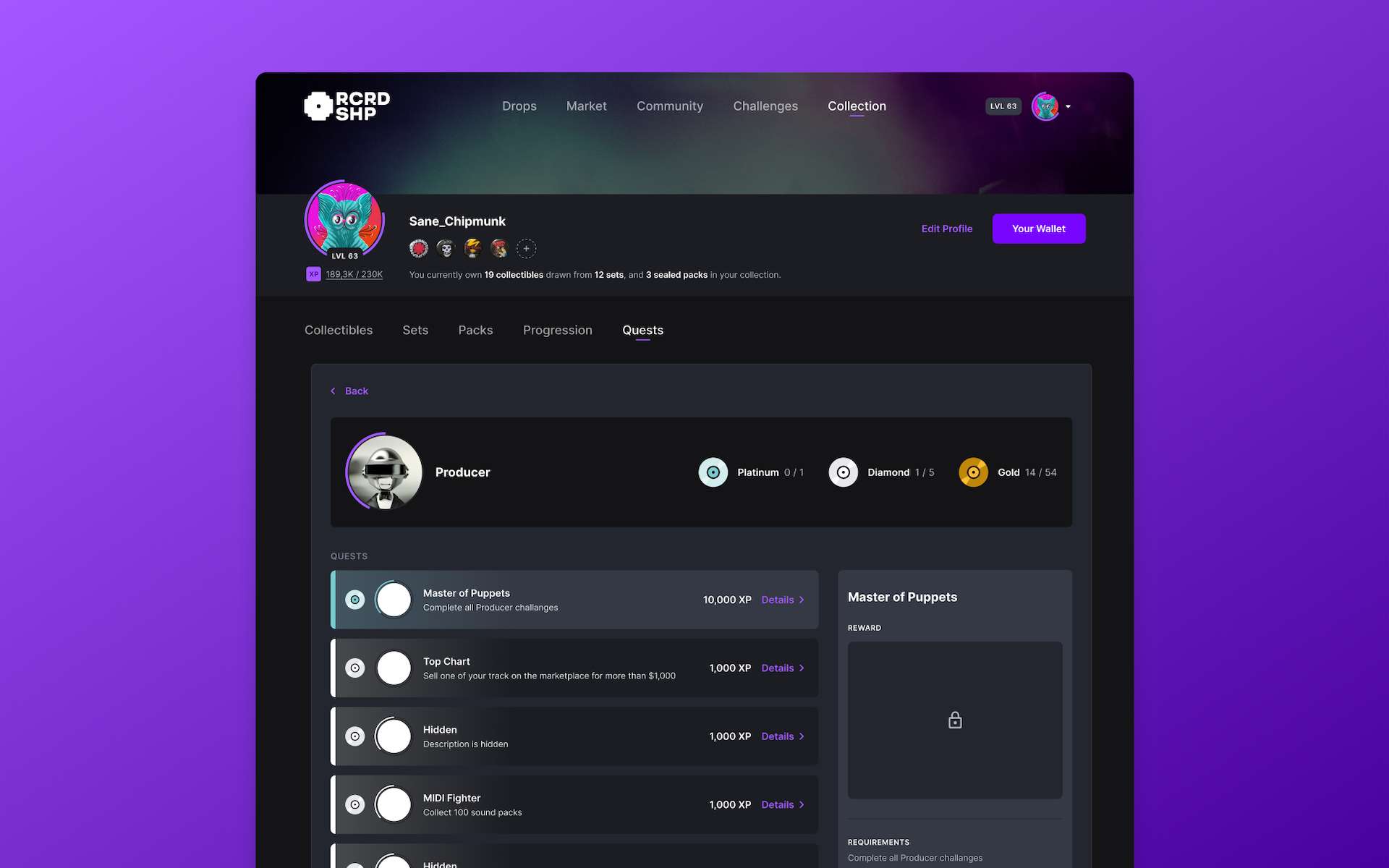
I built the platform’s foundational design system — component library, typography scale, color system, spacing rules, and interaction patterns. This was a product with a lot of surface area (marketplace, user profiles, collectible detail pages, drop countdown pages, trading flows, achievement systems) and a small team, so the system needed to do heavy lifting. Consistent patterns meant engineers could build new features without waiting for a designer to spec every screen.
Collectible Card Templates
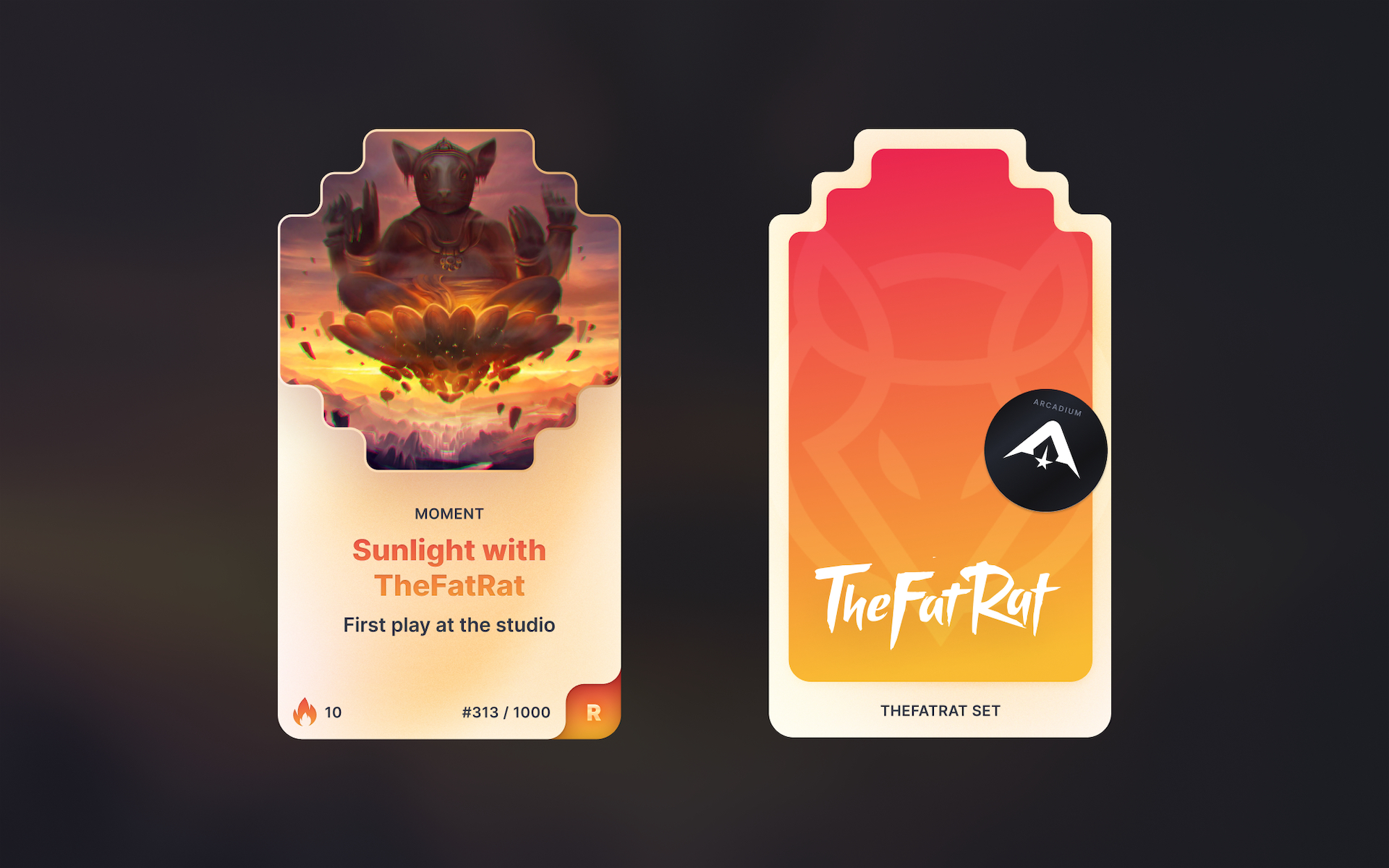
This was one of the more interesting design problems on the project. Every collectible needed to feel unique to the artist — their aesthetic, their brand, their music — but the system also needed to be scalable. We couldn’t custom-design every single card from scratch.
I collaborated with Simon and with artists to create a flexible template system for the collectible cards. The templates defined the structure (layout, rarity indicators, metadata placement, visual hierarchy) while leaving room for artist-specific artwork, color palettes, and photography. The result was a system that could produce hundreds of visually distinct collectibles without breaking consistency or requiring a designer for every release.
The Marketplace Experience
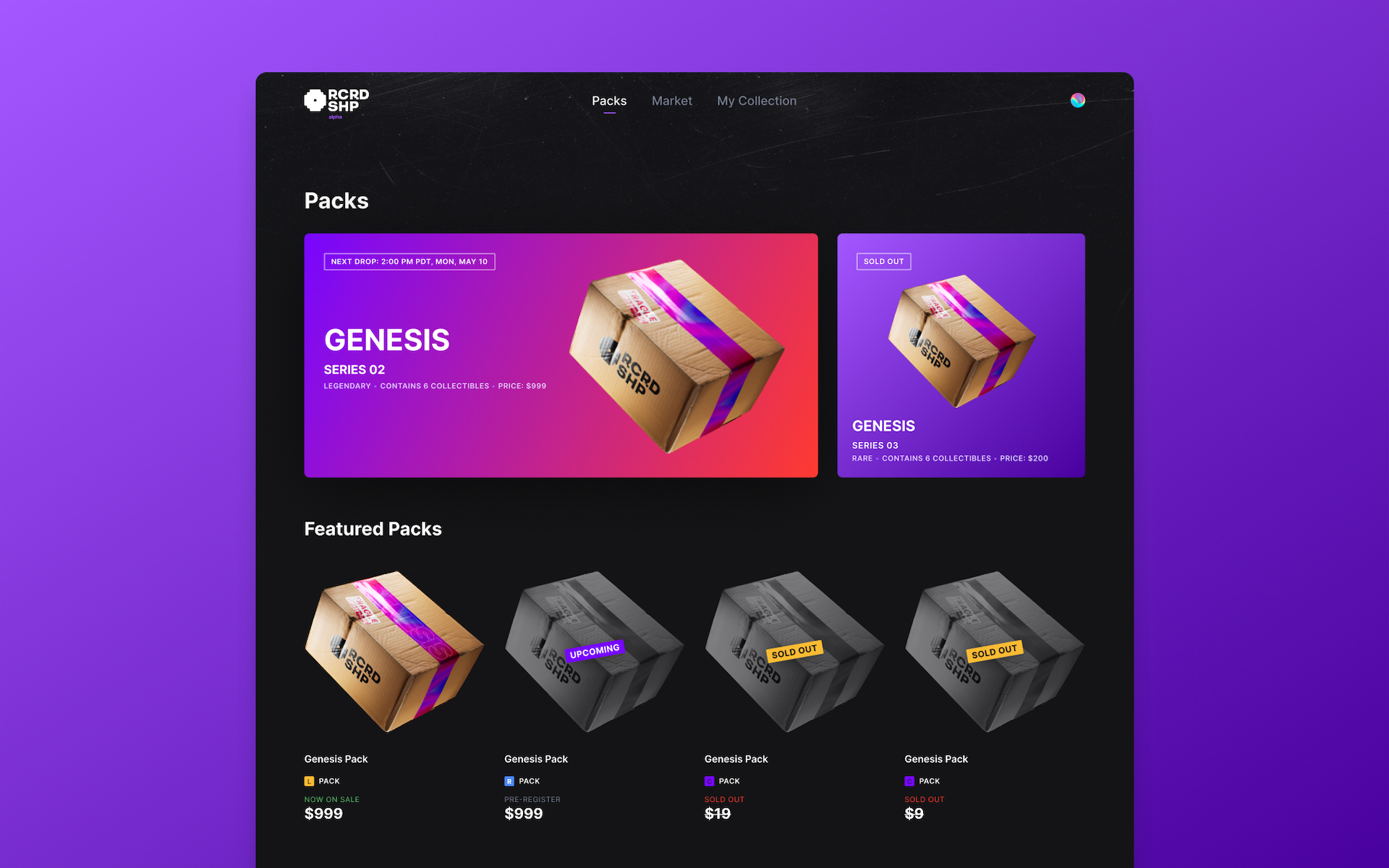
I designed the core marketplace flows: browsing drops, filtering by artist or genre, viewing collectible details (rarity, edition size, ownership history), buying, and trading. The drop mechanic was particularly important — timed releases with limited quantities create urgency, and the UX needed to handle high demand gracefully without confusing users about what was available, what was sold out, and what was coming next.
How We Worked
The team was distributed across six time zones, which meant async communication had to be tight. I worked within Shape Up–style squads alongside developers, providing not just Figma specs but front-end code references and detailed implementation notes to make sure what got built matched what was designed. Every feature went through collaborative review cycles before shipping.
Impact
- Launched a fully functional blockchain-based music collectibles marketplace accessible to mainstream users
- Built the platform’s design system from scratch, establishing visual consistency across all product surfaces
- Created a scalable collectible card template system that supported dozens of artist releases without custom design work per card
- Designed UX flows that successfully abstracted blockchain complexity — users could buy, collect, and trade without understanding the underlying technology
What I Learned
RCRDSHP taught me how to design for a completely new product category. There were no established patterns for “music NFT marketplace” — no competitor to copy, no user expectations to lean on. Everything had to be reasoned from first principles: what does a user already understand, what’s genuinely new, and where can familiar patterns (e-commerce, music streaming, card collecting) do the heavy lifting so the blockchain parts don’t create friction?
It also reinforced something I keep coming back to: the best way to make complex technology accessible is to make it invisible. The blockchain was the infrastructure, not the interface.
“Bala was one of our first design resources and played a key role in taking our idea and turning it into a visually appealing and functional website… Bala also worked with shape-up squads to make sure each feature our developers implemented had well thought out UX and an attractive and functional UI.”
— Nathan Pahucki, CTO at RCRDSHP